

One day you called your parents about their wellbeing and you ended up hearing the same answer: “We are fine here. We are not living alone for the first time.”
These changes did not appear in one night — they started with those small moments, such as a missed medicine dose, unopened groceries, forgotten home keys and being unable to hear properly.
We always think that these changes are all because of old age, but we are unable to recognise those signs that the elderly need help. Recognising the signs your parent needs assisted living is not about taking away freedom or replacing family care. Sometimes, it is all about making everyday life safer, easier and more comfortable.
In this blog, we will look at 10 signs that make it clear when it is the right time for your parents to consider assisted living — without affecting their freedom completely.
Small changes in elderly people may seem common at first, but noticing those signs early can make a huge difference in their safety, health and independence.
According to a Government of India report, the elderly population is growing rapidly — from 100 million in 2011 to around 230 million by 2036, meaning nearly 1 in every 7 Indians will be a senior citizen. The report also highlights growing concerns around mobility, social isolation, access to healthcare and weakening family support systems.
Families are often unable to accept that their parents have reached the stage where they need assisted living. They realise it when they start noticing small changes such as missed chores or repeated reminders. Here are the 10 signs that your parents need assisted living.
One of the earliest signs families notice is that their parents are unable to do their everyday tasks all by themselves. They may be independent but avoiding their routine responsibilities. The most common signs to look for:
Home is considered the safest place for seniors, but after some time these familiar places become difficult to navigate. Missed steps or poor lighting increase the risk of injuries. Signs to watch for:
According to the Government of India, 24% of seniors have limitations in activities of daily living, 58% have difficulty stooping, climbing or kneeling, and 43% use an aid or supportive device.
Managing medications becomes more complicated when multiple prescriptions, changing schedules and memory challenges come together. Missing medicines once in a while does not feel serious, but repeated skipped medication quickly affects overall health.
Families notice these signs through missed doses, confusion or increased dependence on reminders. Consistent medication management is one of the clearest indicators that extra support is needed.
Many seniors do not mention falls because they worry that family members will become concerned. Instead, families may notice subtle signs like walking more slowly, avoiding stairs or using furniture for support.
Falls reduce confidence as well as physical stability. Addressing these mobility concerns earlier can prevent injuries and help seniors in maintaining their independence longer.
Changes in eating habits are easy to ignore, mainly when family members do not live with their parents. A parent who once enjoyed preparing meals begins skipping them, eating very little or relying only on convenient snacks.
Over time, poor nutrition can affect energy, immunity and overall health. Noticing eating patterns can reveal important signs that support may be needed.
Memory changes become more challenging when they start affecting daily life, routine, safety and decisions. Signs to notice:
As per the Niti Aayog report, 20% of the elderly in India have mental health issues and almost a third of the elderly population exhibits depressive symptoms.
It is very common for older people to socially isolate themselves at this age — avoiding interaction, skipping social gatherings, avoiding calls and spending more time alone. Signs to notice:
We assume some changes are simply because of ageing, but frequent doctor visits, repeated hospital admissions or longer recovery periods indicate a growing need for assisted living support.
Families start booking appointments more often as they notice health concerns that are becoming harder to manage independently. When medical needs become more frequent, everyday support often becomes equally important.
Most families step into caregiving without expecting how demanding it will become over time. Balancing work, personal responsibilities and caregiving slowly creates emotional and physical fatigue.
Reaching a point where your parents need more support does not mean families are caring less — it means care needs have changed. Rather than exhausting yourself between work and compromised care, assisted living provides a sustainable path forward.
Sometimes the biggest sign is when your parent starts asking for help more often than before — meaning daily life is becoming harder to manage on their own. Patterns to notice:
There are rarely clear-cut moments when families feel ready to make this decision. But after noticing certain changes in behaviour, they realise it is time to help their elders with assisted living. These are the important changes that indicate it is the right time to act:
For many families, caring for ageing parents has always been about keeping them safely at home. But today the whole perspective has changed — children are living in different cities due to work and face difficulty in taking care of their loved ones. Assisted living is becoming one of the best ways to create a perfect balance.
It does not only give support to seniors where they need help, but also engages them, makes them feel comfortable and helps them maintain their routine tasks every day. For many families, it is less about replacing family care and more about making care sustainable.
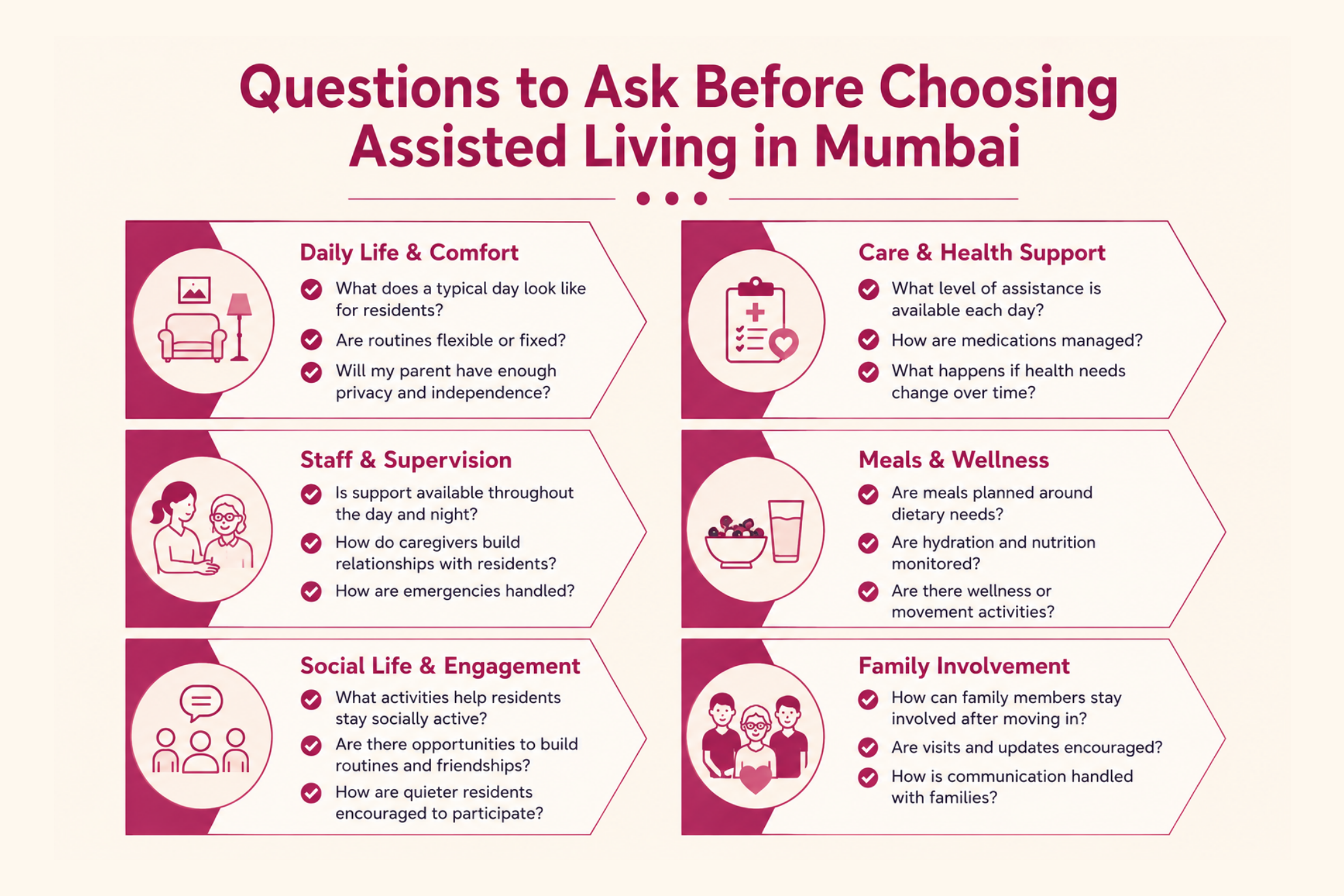
Choosing assisted living is about more than finding a place. Use these questions to quickly check whether it fits your parent’s needs.
Observing these signs in your loved ones is very common at their age. But what should be the next step after noticing them? This is where Sahabhaav comes in.
Sahabhaav offers luxury residential assisted living for elders in Mumbai with facilities across Andheri East, Andheri West and Ghatkopar West. With 300+ seniors served across 7 years and 100+ medical emergencies handled, our focus stays on making the transition feel less like moving away and more like moving into an extended family.
Assistance with daily activities while encouraging independence.
24/7 nursing support with medication and health monitoring.
Regular doctor visits with early health observation.
Physiotherapy and rehabilitation support for mobility needs.
Personalised care plans based on individual routines and health needs.
Memory care services for more advanced care requirements.
There is no perfect time to make elder care decisions — but noticing small changes early can make the conversation easier. If these signs feel familiar, it is the right time to explore support options that will keep your parent safe, comfortable and respected. The right choice is the one that balances independence with the care they now need.
Speak with Sahabhaav and explore assisted living options that help your parent stay supported, comfortable and cared for.
Not sure what the next step looks like? Let Sahabhaav help you find the right care option for your parent — one that feels like home, not a compromise.
📞 7777079797 | 9699696997 Contact Us Today →Start by understanding where they need support — daily activities, mobility, health or safety. Then choose the right option such as family support, home care or assisted living based on their needs.
Focus the conversation on comfort, safety and maintaining independence rather than moving out. Involve them in decisions so they feel heard and included throughout the process.
Families evaluate care needs and consider additional support through home care, assisted living or supervised care arrangements to ensure safety with quality of life.