
Banner Image

Tech in Elder Care: How Smart Devices Improve Safety & Independence

The elderly population in India is increasing at an unprecedented rate. The National Statistical Office (NSO) estimates that in 2022, there were 149 million people aged 60 and above in India, and this figure is predicted to go up to 194 million by 2031, which would account for approximately 13% of the total population.

Moreover, due to urban migration and smaller families, almost 25% of senior citizens now living alone or with only one spouse are over 60 years old.

These factors have created a new market for elder care technology in India — a field that merges creativity and care to provide safety, comfort, and autonomy to the older population. Read on to learn more about technology for elderly care.

What Is Technology in Elder Care?

Elder care technology means smart gadgets and systems intended to keep the elderly living safely, easily, and more connected daily. Among such devices are:
Vital signs & fall detection Home automation systems Movement sensors & alerts Medication reminders Real-time family & doctor connection

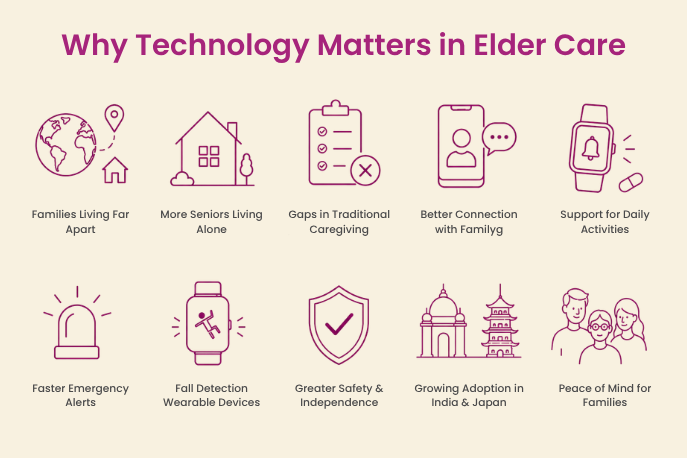
Why Technology Matters in Elder Care?

explanation why technology matters in elder care

India is going through significant changes: young people leave for better job opportunities, and elders are increasingly living in smaller households or alone. Conventional caregiving approaches are being challenged — but elder care technology in India is filling those gaps.

Technological innovations have made it possible for elderly people to stay in close touch with family and friends, carry on with daily life, and receive emergency notifications.

Take the example of a senior wearing a device that detects falls and alerts family members. No longer is this technology something of the future — it is already practical and being adopted in Indian households, much like it has been in countries like Japan.

Sahabhaav Assisted Living
Wondering what a safe, supported home for your loved one looks like?
Our assisted living facilities in Mumbai bring together attentive care, familiar comforts, and the right level of support — so families can breathe easier.

6 Modern Devices for Elderly Care To Improve Their Safety and Independence

In 2025, the care of the elderly is being transformed by technology — intelligent gadgets, surveillance devices, and connected machines — that ensures health, reduces family worries, and helps seniors live respectfully and independently.

01

Smart Medication Boxes

Smart pill dispensers with compartments, alarms, and mobile notifications help elderly patients manage multiple medications. Advanced models connect with cloud platforms so doctors can monitor adherence.

↓ 35% medication errors Missed dose alerts Self-management
Example: A 70-year-old retired teacher in Mumbai gets reminders for his morning and evening doses, and his daughter is alerted if he misses one — preventing unnecessary hospital visits.
02

Camera Systems

Motion-sensing cameras notify caregivers instantly upon detecting unusual activity like falls or wandering — or when a person has NOT moved for long periods. Mobile apps allow remote family monitoring.

↓ 40% response time Remote monitoring Accident prevention
Example: A senior in Mumbai tumbled on stairs and the camera system instantly alerted the family, enabling timely medical assistance.
03

WanderGuard Systems

Designed for elderly with dementia or Alzheimer’s, WanderGuard uses GPS or RFID technology to alert caregivers the moment a senior crosses a designated safe boundary.

Safe movement freedom Boundary alerts Reduces anxiety
Example: A 75-year-old with early-stage dementia in Mumbai had a WanderGuard bracelet alert his daughter when he left his garden, avoiding a dangerous situation.
04

Voice-Activated Assistants

A core part of life automation assistance, voice assistants allow seniors to set reminders, control smart appliances, and interact with family — all without physically operating a phone or switch.

Greater independence Less caregiver load Smart home integration
Example: A senior in Mumbai uses a voice assistant to turn on lights, lock doors, and get medication reminders — leading a safe, independent life.
05

Telehealth & Remote Monitoring

Seniors can monitor blood pressure, heart rate, and oxygen levels while doctors receive the data simultaneously. Video consultations reduce unnecessary hospital visits and provide timely medical help.

↓ 20% hospitalizations Early detection Physical comfort
Example: A senior in Mumbai uses a smart BP monitor — weekly readings go directly to her cardiologist, enabling informed medication changes without visits.
06

Smart Home Automation

From lighting control and temperature regulation to health-wearable integration and remote security locks — smart home automation creates a safe, convenient environment for seniors living alone.

Fewer falls & accidents Less caregiver dependency Greater comfort
Example: Motion detectors in a Mumbai home turn lights on/off as the senior moves at night. Smart locks and temperature controls add safety and comfort.
Sahabhaav Dementia Care
Caring for a loved one with dementia or Alzheimer’s?
Our dedicated dementia care programme in Mumbai is built around dignity, routine, and specialist support — giving families the confidence that their loved one is truly understood.

How to Set Up Smart Technology for Older Adults

Introducing smart technology for the elderly increases safety, independence, and comfort. The key is doing it slowly and in the end user’s favour.

1

Identify Needs First

Begin with an analysis of the senior’s daily difficulties. Is the priority medication management, fall prevention, or appliance control? Knowing priorities helps allocate the right devices.

2

Start with Simple Devices

Choose user-friendly tools first — health wearables, fall-detection sensors, voice assistants, or motion sensor lights. These deliver immediate benefits without overwhelming the user.

3

Introduce Technology Gradually

Don’t install everything at once. Begin with one or two key devices, then add more as the senior gets comfortable. A smart pill organiser → health wearable → home automation is a good sequence.

4

Provide Guidance and Support

Promote hands-on practice with clear, straightforward instructions. Family members, caregivers, or health professionals should assist in changing settings and monitoring use.

5

Maintain and Review

Periodically check devices, keep software updated, and confirm that alerts and notifications are functioning correctly. This maintains the system’s reliability and effectiveness.

Schedule a Visit
See Sahabhaav’s care environment for yourself
Sometimes the best way to understand what’s right for your family is simply to visit. Come meet our team, see our facilities, and ask any questions you have — no pressure, just an honest conversation.

Challenges in Implementing Elder Care Technology in India & How to Overcome Them

Low Awareness & Tech Literacy
Conduct awareness campaigns, training sessions for seniors and caregivers, and provide simple, user-friendly devices.
High Cost of Devices
Promote local manufacturing, offer government or insurance incentives, and introduce affordable device alternatives.
Poor Connectivity in Rural Areas
Expand broadband and 4G/5G networks, develop offline-compatible devices, and use mobile-based solutions.
Data Privacy & Security Concerns
Implement encrypted communication, secure cloud platforms, and clear regulations for health data protection.
Cultural Resistance to Technology
Design culturally-sensitive devices, involve family members in training, and highlight the benefits of smart caregiving.
Limited Local Innovation
Encourage startups and research in India-specific elder care solutions; collaborate with healthcare professionals for customised products.

The elderly are provided with security, independence, and convenience through the latest technologies like senior monitoring devices, life automation assistance, and more. At Sahabhaav, we help families implement the best solutions for seniors’ needs with luxurious accommodation — combining innovation, simplicity, and care to make daily life safer and more joyful for our residents.

Get in Touch with Us →

FAQs about Smart Devices for Safety and Independence

Q How do smart devices enhance senior independence in 2025?
Contemporary gadgets — wearables, voice control, and home automation — assist the elderly in safely accomplishing daily activities, reducing dependence on caregivers and encouraging greater independence.
Q Do monitoring devices for elder care have any reliability issues?
Definitely not. Sophisticated sensors, AI-powered alerts, and secured cloud systems are responsible for precise monitoring of health, movement, and emergencies for the elderly at home or in assisted living.
Q Can older adults easily use new elder care technology?
Absolutely. New products come with user-friendly interfaces, voice commands, and mobile compatibility, allowing seniors to use gadgets confidently with minimal assistance.