
Have you ever thought about living in a place where no one understands your cultural background? For many elders it has become the harsh reality of their lives. As Indian society is becoming more and more diverse, cultural elder care in India becomes necessary. The World Health Organization (WHO) also stresses cultural sensitivity in matters of elder care within their UN Decade of Healthy Aging (2021-2030) framework. In this blog, we will discuss why cultural sensitivity matters in elder care facilities, along with its importance and how to implement it.
Cultural sensitivity means understanding and respecting others’ beliefs and backgrounds. In cultural elder care in India, it refers to providing care to the senior citizens as per their needs, requirements, traditions, and values and by conversing with them in their language. Its main aim is to make them feel comfortable and adjusted within the society. By providing them personalized traditional elder care, they can connect with people more appropriately. With culturally tailored senior care plans, we can get a huge positive response from their end, which tends to give better results. Giving them a culturally sensitive environment helps them in their upliftment and progress of living within the society.
For example, Ask elders about their cultural beliefs and basic questions about their time so as not to make them feel less involved in the community. As with the growing Gen-Z society, they feel lost and uninvolved in societal matters.
| Starting with the journey of implementing cultural sensitivity in elder care in Indian tradition, it required a structured approach. The very first step is to respect their culture, traditions, and beliefs. By acknowledging this, you can easily break the language barriers, which will provide them emotional support. |
| The second step is to prepare personalized traditional elder care plans that make them feel understood by the society. This will increase the chances of them getting engaged with their care plans. |
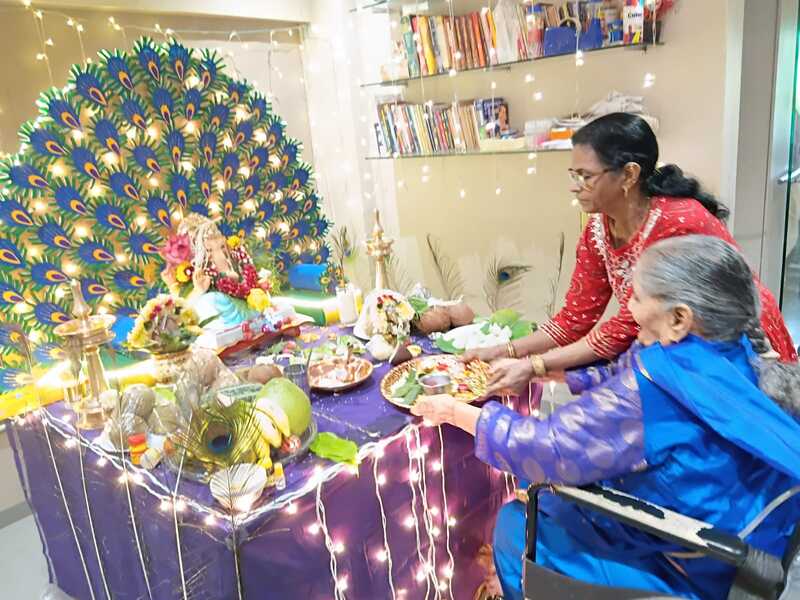
| The third step can be taken by celebrating their traditional customs and festivals. This not only embraces their trust with the family members but can also be a positive outcome for their elder care plan. |
| At last we can understand their spiritual and religious beliefs, which reassure them that their values are getting valued by the other people. |
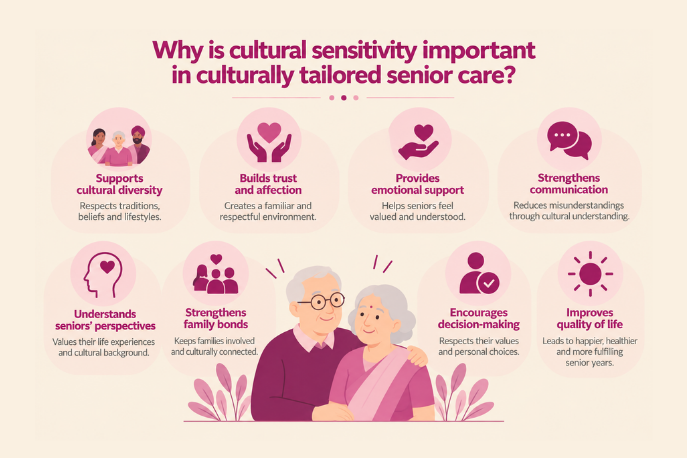
Every senior member of the family brings their lifelong experiences with them. These experiences are made with their own cultural myths and mythologies. Cultural sensitivity is becoming important in culturally tailored senior care. Some of the important points are given below:
Sahabhaav is a secular geriatric centre in Mumbai, caring for over 350 senior citizens since its inception in 2019. One of the core values is cultural sensitivity. Sahabhaav offers a homely feeling always, offering culturally tailored senior care with personalized care based on your cultural, religious and clinical background. From stress-free to actively engaging living, we provide them all. A family-like community that is always present when it comes to elderly care.
The matter of cultural sensitivity is solved by us through culturally elder care in India. For more, visit our website, www.sahabhaav.com and know about us.
Cultural sensitivity plays a huge role in the matter of elder care. By listening to them talk about their time, their cultural thinking, and their living styles, we can easily acquire their trust in us. We can try our best to give them a feeling of relying on us wholeheartedly. By giving personalized traditional elder care, they can be free from hesitation and the social gap they created for themselves with society. Hence, in the evolving atmosphere of society, cultural sensitivity must be a necessity.
There are many barriers, like language, lack of culturally tailored senior care, biased perspectives, social isolation, etc.
Providing culturally sensitive care involves proper understanding of their factual beliefs, conducting assessments, and framing personalized care plans.
Caretakers can support via education and training, by building trust, by actively listening to them, by showing empathy, and through cultural competence.