

Introduction
What is post-surgery care for the elderly in Mumbai?
What Does Senior Recovery Care After Surgery Include?
When Should Families Consider a Rehabilitation Stay for Seniors?
Home Recovery vs. Rehabilitation Stay (Key Differences)
What to Check Before Choosing a Short Stay After Hospital Discharge
Postoperative Care for Elderly: What Should Families Plan For?
What Makes a Senior-Friendly Recovery Environment?
How Long Should a Senior Stay After Surgery?
A Family Checklist for the First Week After Discharge
How Sahabhaav Supports Short-Stay Recovery for Seniors
Summing Up
FAQs About Post-Surgery Care for Elderly in Mumbai
Key Takeaways
|
Leaving the hospital is an achievement in itself but for many seniors, it is not the end of the story. After surgery, an elderly parent still needs help with mobility, medication, meals, personal care and follow-up appointments. This is where post-surgery care for the elderly in Mumbai becomes important for families.
The right senior recovery care after surgery can make the transition from hospital to everyday life more structured and comfortable. For seniors who need additional support, a short stay after hospital discharge can provide time to recover before returning home.
Depending on their needs, postoperative care for the elderly also includes nursing assistance, physiotherapy and daily support. For families exploring elderly convalescence care in Mumbai, this blog will help you in understanding what to look for to make the decision easier.
Post-surgery care for an older adult is the support provided during the recovery period after an operation. It involves help with everyday activities, medicines, movement, meals, personal hygiene and follow-up visits along with professional supervision when required. The goal is to help the senior recover safely while gradually returning to their usual routine and level of independence.
Recovery after an operation involves much more than rest. Older adults need assistance with everyday tasks while they regain strength and mobility. These are the things that senior recovery care must include.
| 1. | When the senior needs help with getting out of bed or moving around safely. |
| 2. | When family members cannot provide the supervision needed during recovery. |
| 3. | The senior needs regular physiotherapy or support with prescribed exercises. |
| 4. | Managing medicines & following post-surgery instructions becomes difficult. |
| 5. | When the home environment is not suitable for the senior’s mobility needs. |
| 6. | The family needs temporary support before the senior returns to their usual routine. |
| 7. | A doctor recommends additional rehabilitation or supervised recovery support. |
| 8. | When the senior wants a comfortable environment with professional caregivers and nursing assistance. |
| 9. | When family members live outside Mumbai, they need reliable short-term care for an elderly parent. |
| 10. | When the senior needs supervised care during the recovery period. |
| Factors | Home Recovery | Rehabilitation Stay |
| Living arrangement | The senior recovers in their own home. | The senior stays temporarily at a care facility. |
| Daily assistance | The assistance is provided by family or hired caregivers. | The support is available as part of the stay. |
| Mobility support | Depends on the home setup as well as available help. | It includes assistance with movement & prescribed exercises. |
| Routine | The family members manage the daily schedule. | There is a structured routine with planned care and activities. |
| Physiotherapy | Here the parents needed an external physiotherapist. | Here the physiotherapist is arranged by the facility. |
| Medical supervision | It solely depends on home-care arrangements. | Nursing as well as healthcare support is available. |
| Family involvement | Family helps in day-to-day coordination. | Families remain involved while care is provided on-site. |
| Duration | It continues until the senior is comfortable managing their own work. | It is designed as a temporary stay based on recovery needs from person to person. |
| Best suited for | Seniors who can recover safely with adequate support at home. | Seniors who need additional assistance before returning to their regular routine. |
The right short-stay facility is the one that offers more facilities than a comfortable room. Families should check whether it can meet the senior’s recovery needs and provide appropriate support throughout the stay. Here are the few things to consider while finalizing your decision.
Quick Tip: Do not choose a facility based on the room or location alone. Focus on the level of care your senior needs during recovery and whether the facility can provide it consistently.
Families should plan for a senior’s comfort, safety and practical needs throughout the recovery period. Imagine an elderly parent coming home after surgery. The hospital stay is over but the family now has to figure out what the next few days will look like.
These questions are often overlooked while planning the surgery. Good postoperative planning is all about preparing for these practical moments in advance so the senior has a comfortable and supportive environment while the family knows what to look upon.
A senior-friendly recovery environment should make everyday movement easier while offering accessibility and the right level of support. Not only rooms but also safe bathrooms (grab bars, non-slip flooring), easy access to common areas (dining rooms, lounges and gardens), suitable mobility aids (walkers, wheelchairs and handrails), nutritious meals (balanced and diet-specific options) and a calm routine can all make recovery more manageable. A supportive setting should also allow families to stay connected while the senior returns to their usual routine.
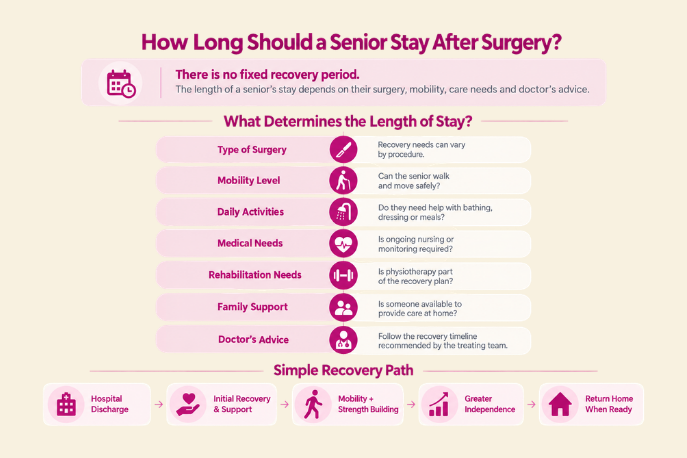
There is no fixed recovery period. The length of a senior’s stay depends on their surgery, mobility, care needs and doctor’s advice.
Hospital Discharge → Initial Recovery & Support → Mobility + Strength Building → Greater Independence → Return Home When Ready
Sahabhaav provides short-stay support for seniors recovering after hospitalisation or surgery, with care and daily assistance during their recovery period. You can choose us because we provide
TestimonialsA HOME where our loved ones live in dignity. The environment is full of love & care. One cannot find a better place. I am counting my blessings, my mother was the first to live there. The love given has added to her age. The staff is super efficient. The doctors are on call. The home is kept spotlessly clean. They are taken out on a car ride to different places of interest. Lastly the food is delicious, healthy & wholesome. It tops the list of Old Age Retirement Homes — Chand Malhotra My mother in law was at Sahabhaav Andheri for a period of around four months. My wife and I would like to express our sincere thanks and gratitude to Dr. Mini, Amee, Dr.Kausar and the entire staff at Sahabhaav for the excellent care she received there. Without exception, each of the caregivers performed their duties with expertise and genuine empathy. But what really touched us was the dignity and respect accorded to the seniors in their care. Thanks again for taking care of Amma and continue to do your wonderful service. Stay Blessed. — Mahesh Nair |
Recovery after surgery can take time especially when a senior needs extra support after hospital discharge. The right short-stay care can make this more manageable. Families should consider the senior’s care needs, mobility and medical guidance before choosing a facility. For seniors in Mumbai, Sahabhaav offers short-stay support focused on recovery and daily care.
Explore Sahabhaav’s short-stay elder care in Mumbai and find the right support for their recovery.
The cost varies based on the senior’s care needs, duration and level of support required. Families should compare services and pricing before choosing a caretaker.
There are many options such as
Elderly convalescence care provides temporary support and supervision to seniors recovering from surgery, illness or hospitalization before they return home.