

For many families the hardest part is not about the cost; it is all about realizing the fact that home care is not enough for their loved ones. This realization comes after juggling with caregivers, rushing to hospitals or watching a loved one being isolated at home.
When aging parents need help with their daily tasks, the very first step of every family member is to go with home care that makes them feel comfortable. But after some time when their condition starts becoming worse, families think about an important question: “Is assisted living worth it?”
When you compare assisted living vs. home care, it is not only about living. It is about making them live independently, which improves their overall well-being. From understanding the cost of home care for the elderly in Mumbai to home nurses vs. care homes, in this blog you will know about senior care that helps you in making decisions wisely.
Assisted living is a residential care option for seniors that combines independent living with professional support. It is best for those who need assistance with daily tasks but do not require intensive hospital care. Residents live in a secure, community-style environment where care, comfort and wellness are integral parts of life.
Home care is a service that allows seniors to receive medical or personal assistance within their own homes. Depending on their requirements, they can get support by a home nurse, caregiver or attendant for a few hours a day or scheduled shifts that help seniors in living in familiar surroundings.
There is no clear answer to whether assisted living is worth it. Before making a decision, look at these eight important factors that can help you choose the most suitable care option.
To make any decision, the first step is to start with knowing your loved ones’ overall health rather than focusing on their age. If they have chronic conditions, frequent falls, memory loss or require regular medical supervision, assisted living can provide the structured support they need, as there is a full team involved in the care. However, seniors who are largely independent continue to do their tasks well with minimal assistance at home.
| According to the Press Information Bureau, seniors above 60 years of age are suffering from chronic conditions like cardiovascular disease (34.06%), hypertension (32%), bone/joint disease (18.8%), diabetes (14.2%) and chronic lung disease (8.3%). |
See how much support your loved one needs to manage everyday activities. So it is better to look at certain things like:
| As per the Ministry of Social Justice & Empowerment, data shows that over 53 lakh Indian seniors, which roughly means 1 in 20, live with a disability that affects their daily functioning. |
Emergencies can happen without warning, especially among older adults. Falls, sudden illnesses or medical complications require immediate attention. Assisted living communities are equipped with trained staff, emergency response systems and senior-friendly infrastructure that provide faster assistance than many home care arrangements.
Physical care is only one part of healthy aging. Emotional well-being is equally important because prolonged isolation can affect both mental & physical health.
Consider whether your loved one:
Think about the long-term care needs rather than only thinking about their present situation. Many health conditions increase with time that increases the need for medical care as well as daily assistance. Choosing a care option that can adapt to changing requirements helps avoid repeated transitions and ensures continuity of care.
While home care looks more affordable at first, it is important to consider the total cost over time. Expenses may include:
Home care requires active involvement from family members as well, even when a caregiver is hired. Coordinating appointments, managing medications, arranging replacements and responding to emergencies can become challenging for working professionals or families living in different cities. But all can be done correctly with your involvement, as having their families behind can encourage them to get the perfect treatment.
It is not only about keeping them safe; it is to help them live well. Look for an option that encourages their independence, provides meaningful daily routines, supports physical & emotional health and allows your loved one to enjoy their golden years with dignity. The best care choice is the one that uplifts quality of life rather than meeting basic care needs.
Key Takeaway: When comparing assisted living vs. home care, focus on your loved one’s overall well-being, future care needs and quality of life rather than making a decision based on cost alone.
Assisted living is not only for seniors with complex medical conditions; it is also ideal for those whose lifestyle or support system changes make independent living more challenging. Here are some people who can benefit the most:
Choosing the right elder care option is an important decision and asking the right questions can help you to assess whether the facility or service meets your loved one’s needs or not. Use this checklist before making a final choice.
| Factors | Home Nurse | Care Home |
| Living Environment | Seniors continue to live in their own homes with nursing care. | Seniors live in a home-like environment with professional care. |
| Care Availability | Care is limited to scheduled shifts or working hours. | 24/7 care and supervision are available as per the needs. |
| Medical Support | It depends on the nurse’s schedule & family coordination. | Access to doctors and emergency assistance under one roof. |
| Daily Living Assistance | They help with basic daily activities during assigned hours. | Provide support with personal care, meals, housekeeping & daily tasks. |
| Social Interaction | It is possible when something is arranged by a family. | Regular group activities and events to interact with other seniors. |
| Safety | They feel secure with family supervision and some changes. | Senior-friendly infrastructure with emergency response systems. |
| Family Involvement | Families manage caregivers, appointments and replacements. | It is handled by the assisted living team that reduces family burden. |
| Long-Term Care | Additional caregivers or services are needed if health deteriorates. | Care plans can be adjusted with changing personal care needs. |
| Overall Experience | Suitable for seniors who need short-term or limited support. | For seniors who require consistent care and a better lifestyle. |
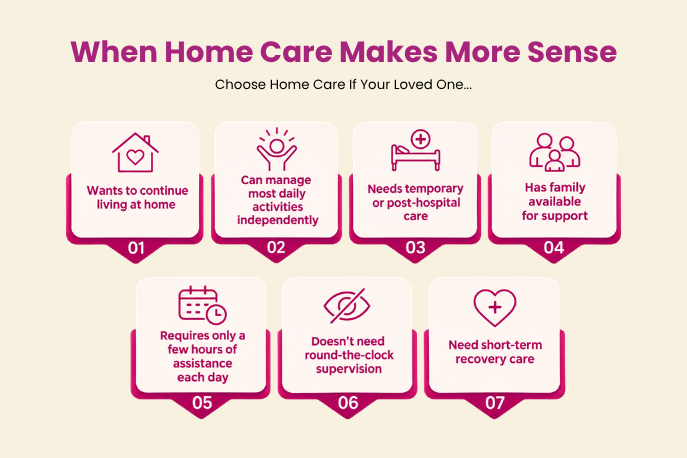
Choose Home Care If Your Loved One…
At Sahabhaav, assisted living goes beyond meeting everyday needs. Our focus is on providing personalized care, medical support and a comfortable environment where seniors can continue to live with dignity and peace of mind.
How Sahabhaav Supports Seniors Beyond Basic Care:
Is assisted living worth it? It depends on various factors, but the top priority is your loved ones health. To choose it, it is important to look closely at what your parents need and then decide wisely based on their condition. As the best option is always the one that keeps them healthy, feel respected as well as valued. By choosing wisely, it not only gives you peace of mind but also satisfaction that your parents are in safe hands now.
If you are exploring assisted living for your loved one, Sahabhaav is here to help. Discover how compassionate & personalized care can make all the difference.
The biggest drawback is that seniors find it difficult to adjust in a new environment with a structured routine. Many can adapt quickly with the support of caregivers as well as because of the welcoming community.
The cost varies based on the level of care, caregiver hours and medical needs. By comparing the total expenses of home care with assisted living, families make a perfect decision.
Assisted living includes accommodation, personal care, medication management, meals, housekeeping, 24/7 support, recreational activities and access to healthcare professionals.